
Types of data communication systems serve as the backbone of our interconnected world, enabling seamless exchanges of information across various platforms. From the simplest phone calls to complex internet communications, these systems illustrate how we transmit data through different mediums. Understanding the distinctions between analog and digital systems, as well as their unique functions, is essential for leveraging technology in today’s digital landscape.
Exploring this topic reveals the intricate relationships among web hosting, security, and the design of online communication systems, all of which play crucial roles in how effectively we connect and share information. As we delve deeper, we also uncover the innovative ways businesses utilize these systems for economic benefit and the impact of mobile computing on the future of data transmission.
Types of Data Communication Systems
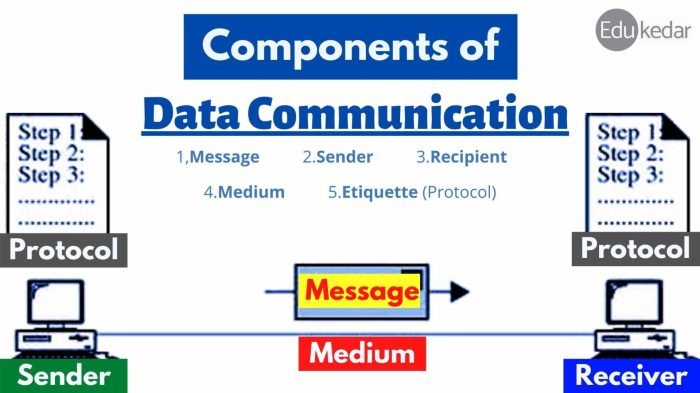
Data communication systems play a crucial role in the transfer of information across various platforms, enabling effective communication in our increasingly interconnected world. These systems can be categorized into distinct types, each serving unique functions that cater to different needs and environments.
Different Types of Data Communication Systems
Data communication systems can be broadly classified into several types based on their function and the methodology they employ to transmit information. These systems include:
- Point-to-Point Systems: This type connects two nodes directly, allowing dedicated communication without interference from other devices. An example is a traditional telephone call.
- Broadcast Systems: These systems transmit data to multiple recipients simultaneously. Television and radio broadcasting are classic examples, where the same signal is sent to countless users.
- Multicast Systems: A more advanced version of broadcast systems, multicast systems send data to a specific group of users rather than everyone. This is commonly seen in streaming services.
- Packet Switching Systems: These systems break down data into packets that are sent over a network. The internet uses packet switching to ensure efficient and reliable data transmission.
Characteristics of Analog vs Digital Communication Systems
Understanding the distinction between analog and digital communication systems is essential for recognizing their respective benefits and limitations.
Analog communication transmits information in a continuous signal, while digital communication uses discrete signals.
Analog systems are characterized by waves that vary smoothly, representing changes in sound, light, or other signals. Examples include traditional radio and television broadcasts. Digital systems, on the other hand, convert information into binary code (0s and 1s), making them more resilient to noise and interference. Common examples include modern smartphones and computers.
Transmission Media for Data Communication Systems
Data communication systems employ various mediums for transmitting information, each with its own set of advantages and drawbacks. These mediums can be classified into:
- Wired Media: Includes twisted pair cables, coaxial cables, and fiber optics. Fiber optics, in particular, are known for high-speed data transfer and minimal signal degradation over long distances.
- Wireless Media: Utilizes radio waves, microwaves, or infrared signals to transmit data. Wi-Fi and cellular networks are prime examples, offering mobility and flexibility.
- Optical Media: Optical communication systems use light as the transmission medium, most notably in fiber-optic cables. They are capable of transmitting large amounts of data at incredible speeds.
Each medium serves specific functions and is suitable for different contexts, reflecting the needs of modern communication systems. The choice of medium can significantly affect the performance, reliability, and cost of communication networks, making it a critical consideration in system design.
Related Technology Concepts
The landscape of data communication systems is deeply intertwined with several critical technology concepts. Understanding these concepts is essential for grasping how online communication operates effectively in today’s digital world. Key areas such as web hosting and domain names, web design and development, and security protocols play a fundamental role in facilitating seamless data exchange.
Web Hosting and Domain Names
Web hosting and domain names serve as the backbone of online communication systems. A domain name is essentially the address at which users can access a website, while web hosting provides the necessary infrastructure to store website files and make them accessible over the internet. The importance of these components can be summarized as follows:
-
Domain names enhance brand identity
: A unique and memorable domain name can significantly affect users’ perception of a website’s credibility and professionalism.
-
Web hosting impacts performance
: The choice of web hosting provider can influence website loading speed, uptime, and overall performance, which are crucial for user experience.
-
Scalability and flexibility
: Reliable web hosting solutions allow businesses to scale their operations as needed, accommodating increased traffic and expanding data communication capabilities.
Web Design and Development
Web design and development play a pivotal role in shaping how data is communicated to users. The effectiveness of a website in conveying information depends significantly on its design elements and functional aspects.Key factors influencing data communication through web design and development include:
-
User Experience (UX)
: A well-designed interface enhances usability, enabling users to navigate through information seamlessly, thus improving content interaction and satisfaction.
-
Responsive Design
: Websites that adapt to various devices ensure that users can access data communication systems from desktops, tablets, or smartphones without any loss of functionality.
-
Visual Hierarchy
: Effective use of design elements like colors, fonts, and layouts can guide users’ attention to critical information, making data more digestible and engaging.
Security in Data Communication Systems
Security is a paramount concern in data communication systems, especially in an era dominated by cyber threats. Robust security measures protect sensitive data and ensure the integrity and confidentiality of information shared online.The role of security can be highlighted through the following aspects:
-
Data Encryption
: Encrypting data in transit prevents unauthorized access and ensures that sensitive information remains confidential during transmission.
-
Authentication Protocols
: Implementing strong authentication methods helps verify the identity of users, minimizing the risk of unauthorized access to communication systems.
-
Regular Security Audits
: Conducting periodic security assessments allows organizations to identify vulnerabilities and strengthen their defenses against potential attacks.
Practical Applications and Innovations
In today’s digital landscape, data communication systems play a pivotal role in the operations of businesses and the advancement of technology. By leveraging these systems, organizations can create innovative avenues for revenue generation, enhance their operational efficiency, and provide improved customer experiences. This section delves into unique methods that businesses employ to monetize data communication, illustrates the integral role of electronics and electrical systems in facilitating these communications, and examines the impact of mobile computing on the evolution of data communication systems.
Unique Methods for Online Monetization
Businesses have creatively adapted data communication systems to optimize their revenue streams through various innovative methods. These methods not only capitalize on the data generated but also enhance customer engagement and satisfaction. Notable approaches include:
- Subscription Services: Companies like Netflix and Spotify offer data-driven content streaming, utilizing user data for personalized recommendations, thus increasing user retention and subscription renewals.
- Data-Driven Advertising: Platforms such as Google and Facebook harness vast amounts of user data to provide targeted advertising, ensuring advertisers reach the right demographics, improving ad performance and revenue.
- E-commerce and Online Marketplaces: Sites like Amazon use data communication to analyze consumer behavior and preferences, enabling personalized shopping experiences that drive sales and customer loyalty.
Support from Electronics and Electrical Systems
Electronics and electrical systems are foundational to modern data communication, providing the infrastructure needed for both wired and wireless communication. These systems enhance data integrity, speed, and security. Examples of their contributions include:
- Networking Devices: Routers, switches, and modems facilitate seamless data transfer between devices and networks, forming the backbone of internet connectivity.
- Signal Processing Technologies: Components such as amplifiers and transceivers improve the clarity and quality of signals transmitted over various media, ensuring reliable communication.
- Circuit Design: Innovations in circuit design allow for miniaturized components, enabling mobile and portable devices to efficiently manage data communication while conserving energy.
Overview of Mobile Computing
Mobile computing has revolutionized data communication systems, enabling users to connect and communicate from virtually anywhere. This transformation has led to several significant advancements and implications:
- Increased Accessibility: With the rise of smartphones and tablets, individuals can access information and services on the go, enhancing productivity and convenience.
- Real-Time Data Sharing: Applications such as instant messaging and video conferencing utilize mobile communication to facilitate immediate interactions, supporting remote work and global collaboration.
- Cloud Computing Integration: Mobile devices often rely on cloud services for storage and processing, allowing users to retrieve and share data seamlessly across platforms, regardless of location.
Last Word
In conclusion, the exploration of types of data communication systems highlights their critical importance in modern communication. From the fundamental differences between analog and digital methods to the significant role they play in business and technology, these systems are vital for efficient information transfer. As we continue to advance technologically, understanding these systems will remain essential for navigating the ever-evolving landscape of data communication.
Helpful Answers
What are the main types of data communication systems?
The main types include analog communication systems, digital communication systems, and hybrid systems that combine both methods.
How do data communication systems enhance business operations?
They improve efficiency by enabling quick and reliable information exchange, which facilitates decision-making and enhances customer service.
What mediums are commonly used for data transmission?
Common mediums include copper wires, fiber optics, and wireless technologies such as radio waves and microwaves.
Why is security important in data communication systems?
Security is crucial to protect sensitive information from unauthorized access and to ensure data integrity during transmission.
How does mobile computing impact data communication systems?
Mobile computing allows for data communication on the go, increasing accessibility and flexibility in how users connect and interact with information.